
In today’s digital world, having a website or blog is not enough. If people cannot find your content online, it becomes difficult to grow your website or business. This is where SEO (Search Engine Optimization) plays a crucial role. It helps websites appear on search engines like Google when users search for information, products, or services.
Whether you are a blogger, business owner, or digital marketer, understanding it can help you attract more visitors and increase your online presence. In this article, we will explain what SEO is, how it works, and why it is important in a simple and easy-to-understand way.
What is SEO?
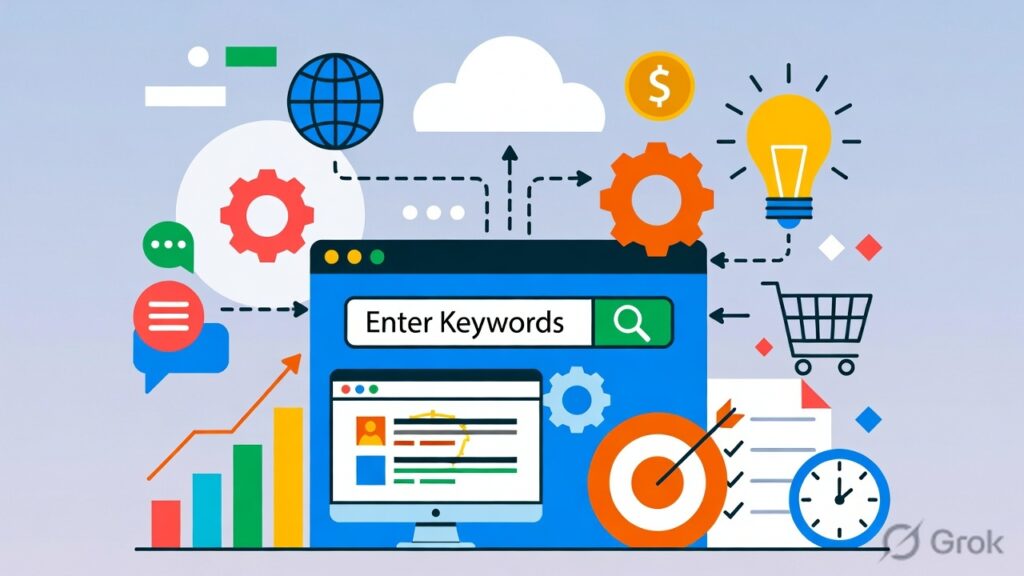
SEO stands for Search Engine Optimization. It is the process of improving a website so that it ranks higher in search engine results pages (SERPs).
In simple words, it helps search engines understand your content and show it to the right audience.
For example, if someone searches “best skincare tips for glowing skin”, SEO helps relevant blogs or websites appear at the top of Google search results.
The main goal of it is to:
Increase organic (non-paid) traffic
Improve website visibility
Reach the right audience
Build credibility and trust
When your website ranks higher on search engines, more people are likely to visit it.
Why it is Important
SEO is important because most people use search engines to find information, products, or services.
Here are some key reasons why it matters:
• Increases website traffic
• Improves online visibility
• Builds credibility and trust
• Helps businesses reach the right audience
• Generates organic (free) traffic
• Improves user experience
According to studies, over 90% of online experiences start with a search engine, which makes it extremely valuable.
How Search Engines Work
Before understanding it deeply, it’s important to know how search engines work.
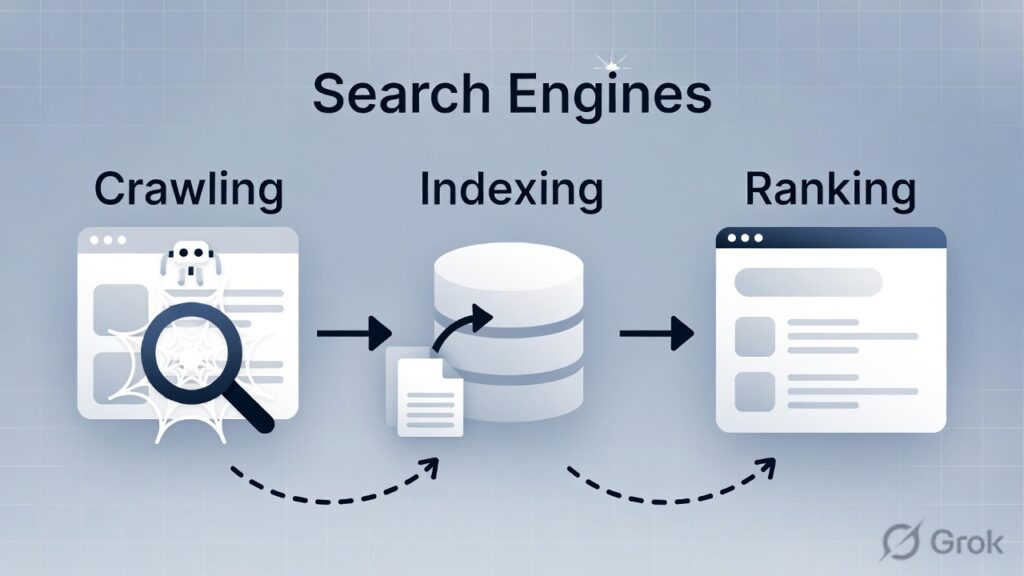
Search engines follow three main steps:
1. Crawling
Search engines send bots (also called spiders) to scan websites across the internet.
These bots discover new pages and update existing ones.
2. Indexing
After crawling, search engines store and organize the information in their database.
This database is called the index.
3. Ranking
When someone searches for something, the search engine analyzes all indexed pages and ranks them based on relevance and quality.
The best results appear at the top of the search results page (SERP).
Types of SEO
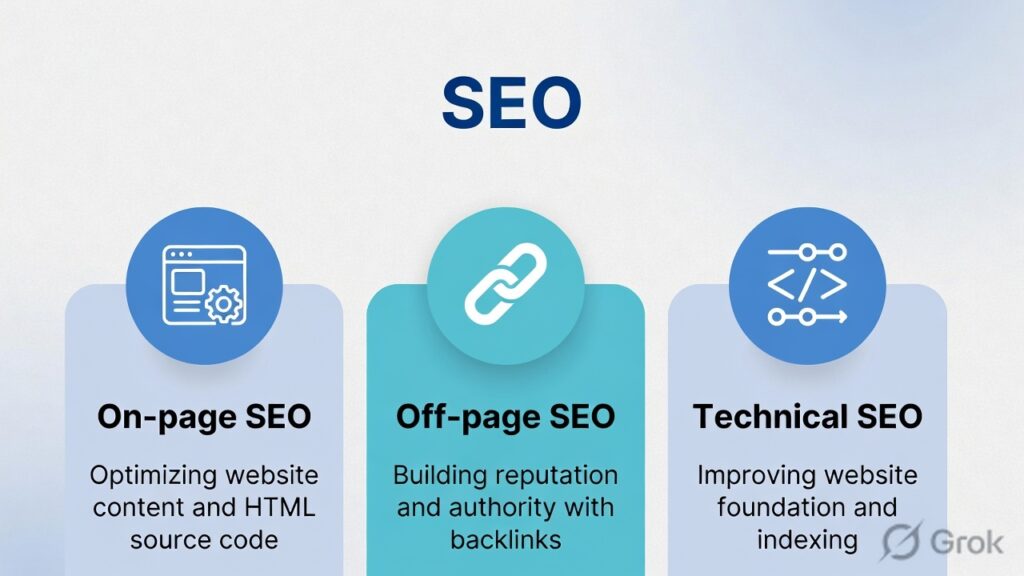
It is generally divided into three main categories.
1. On-Page SEO
It refers to optimizing the content and elements within your website.
Important On-page SEO factors include:
Proper use of keywords
Title tags and meta descriptions
Headings (H1, H2, H3)
Image optimization
Internal linking
High-quality and informative content
Good on-page SEO helps search engines understand your content better.
2. Off-Page SEO
It focuses on improving a website’s authority and reputation outside the website.
Some important off-page SEO techniques are:
Building backlinks from other websites
Social media sharing
Guest blogging
Influencer collaborations
Brand mentions online
When reputable websites link to your content, search engines consider your site more trustworthy.
3. Technical SEO
It focuses on optimizing the technical structure of a website to help search engines crawl and index it efficiently.
Important technical SEO factors include:
Fast website loading speed
Mobile-friendly design
Secure website (HTTPS)
XML sitemaps
Proper website structure
Fixing broken links
A technically optimized website improves both search engine performance and user experience.
What Are Keywords in SEO?
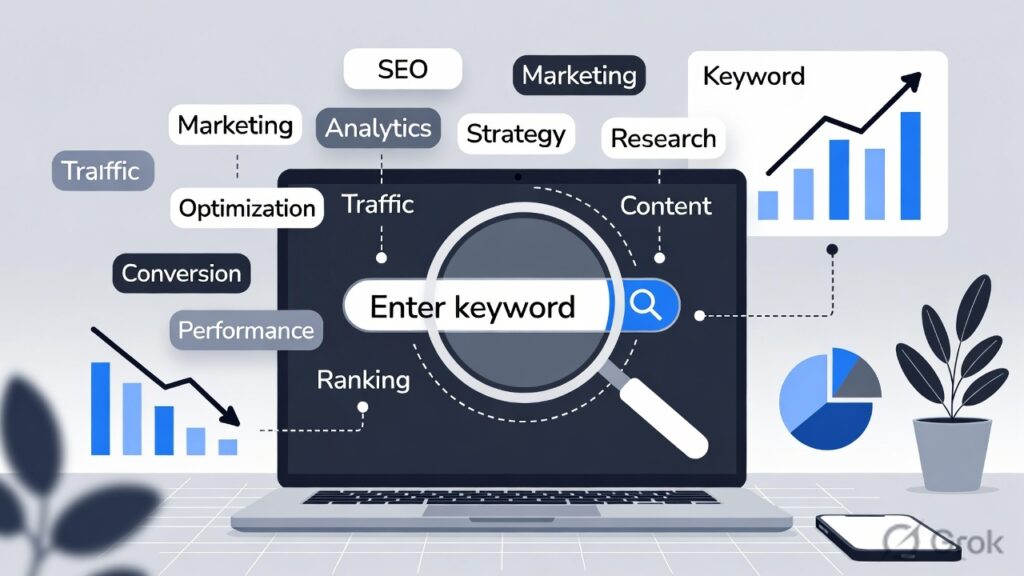
Keywords are the words or phrases people type into search engines when searching for information.
Examples of keywords include:
What is SEO
Digital marketing tips
How to start a blog
There are two main types of keywords:
Short-Tail Keywords
These are short and broad search terms.
Examples:
SEO
Marketing
Long-Tail Keywords
These are longer and more specific phrases.
Examples:
What is SEO for beginners
How to improve Google rankings
Long-tail keywords often bring more targeted and relevant traffic.
Key Elements of a Successful SEO Strategy
A strong SEO strategy involves multiple factors working together.
Some essential elements include:
High-Quality Content
Content should be informative, useful, and engaging for readers.
Keyword Research
Understanding what people search for helps you create relevant content.
User Experience
A website should be easy to navigate, fast, and mobile-friendly.
Backlinks
Links from other trusted websites help increase your site’s authority.
Common SEO Mistakes to Avoid
Beginners often make mistakes that affect their rankings. Some common SEO mistakes include:
Keyword stuffing
Duplicate content
Slow website speed
Ignoring mobile optimization
Poor website structure
Avoiding these mistakes can significantly improve your SEO performance.
Conclusion
SEO is a powerful strategy that helps websites gain visibility and attract organic traffic. By optimizing your website with the right keywords, high-quality content, and proper technical structure, you can improve your chances of ranking higher on search engines.
It is not a one-time process; it requires consistent effort, updates, and improvements. However, once implemented correctly, It can provide long-term benefits and steady website growth.
Whether you are a beginner blogger or a business owner, learning it can open the door to greater online success and audience reach.